Art by Nadia Uddin
Her Name Means Solitude
by Masha Kisel
March 3, 1879
My Dearest Grigoryi,
I’m sorry I didn’t say goodbye. I could feel you watching from the window as I closed the iron gates of St. Petersburg’s Theological Academy one last time, carrying my galoshes in one hand and all my other possessions slung over my back, tied up in a bed sheet. I hope you don’t blame yourself for my expulsion. I didn’t turn around. I wanted to remember your face from before.
If I were to tell my father, I’d get a lashing with a riding crop.
“Everything I’ve done to escape our family shame, all the money spent on your education! You were in your last year, so close to completing your studies! Are you even my son?” I can hear the scripted scorn already.
But how can father not realize that even after the abolishment of serfdom, he carries the mentality of a slave by craving the approval of a master? You and I have vowed to bow down to no one. You’ll continue our work of answering only to ourselves, won’t you?
I walked down Moika street, breathing in damp Neva air. The chill hurt my lungs. I felt so small and orphaned without you. I wanted to cry for myself. But I will not return to my father in the village.
March 9, 1879
Dear Grigoryi,
How are things at the seminary? The basement room I found is smaller than a closet. But even in this subterranean hovel I can’t shut out the sounds of hooves on cobblestone and the crass shouting of coach drivers. Perhaps it’s because I am used to the quiet life in the countryside. Even in our seminary lodgings the buzzing of conversations irritated me. Back in my village, the big city seemed as distant as the stars when you looked up in the night sky. How could the city coexist alongside the slow mooing of cows greeting me on the dusty road as they walked home from pasture, uselessly swishing flies with their tales emitting the sweet smell of manure? Time moved differently when all you could see was miles of wheat, when I spent lonely hours day-dreaming of love, of fated meetings. “I go out on the road alone…”
Why did I come here? Here, in St. Petersburg, I am an insect. At the seminary I was shielded by the dignity of intellectual work. But now I am naked, painfully self-conscious of the small hole in my overcoat, which I can’t help but finger compulsively. I feel that I’m shrinking. My legs grow thinner, skin and muscle and bone retract and disappear, replaced by spindly appendages that can barely carry me. I am a scuttling vermin, crawling through the threadbare lining of my overcoat.
Grigoryi, when will I see you again? Do our plans still stand?
April 1, 1879
Dearest Grigoryi,
I was so happy to read your letter. Yes, of course, I understand that being seen with me might make trouble for you. We shall wait until summer to reunite. But I have wonderful news to share! I’ve found employment. I must record this brief moment of contentment. My heart beats a steadier rhythm and my nausea has subsided. The humiliation of poverty is an illness. When I’m worried about money I hiccup and fart. My skin itches. Bedbugs and spiders feast on me while I sleep. But this new job sweeps a healing hand over my body to make me well again. Even the bites seem fewer.
I’ve been hired as an English tutor in the Yazhin family. I walk into the foyer and I am aware of my shabby clothes. Fevered shame makes me flush crimson but I fight it so I don’t walk out and lose my only source of income. Pride can be a burden. I told you that my grandfather was a serf, a house manager for a family just like this one. He felt no shame in his honest work. The Yazhin home is full of servants, no doubt children or grandchildren of former serfs. Their youngest son Seryozha studies English. He’s a spoiled boy, but that isn’t his fault. When he makes faces at his vanilla custard, I recall how I longed for sweets when I was his age. My mother, bless her memory, would feed me caramelized beets. I didn’t discover honey until I was twelve. Seryozha spits it out. “It’s too cold!” he shouts at the cook “take it away!”
April 14, 1879
Grigoryi,
Have you ever had a premonition that your life was about to change whether you wanted it to or not? I had this same feeling the night we were caught.
I met an odd fellow yesterday. A French tutor at the Yazhin home.
“Hello!” He grinned the first time we passed each other in the corridor lined with frowning portraits of Yazhin ancestors. I was taken aback by his insolence.
“You are Kopeikin, Seryozha’s English tutor, right? ‘Khou do u do?’” he said in English, staring at me expectedly as if he were waiting for a circus animal to walk on its hind legs. I wasn’t sure he’d understand me if I were to respond in English. So I nodded and kept walking.
“Khou dooo yoo do?” He ran after me, his persistence pursuing me like a shot arrow.
I turned around. “Very well, thank you.”
I replied in English. The blankness of his expression told me that he had depleted his own English vocabulary.
“Interesting family, aren’t they? Gospozha Yazhin is the passionate type, so she won’t allow any female governesses. Can you imagine Yazhin with those red jowls of his on top of a French governess? She’ll only let in fat old nursemaids and poor university students like us!”
It was rude to gossip about the Yazhins in their own home and I was about to tell him so before he interrupted.
“Listen, if they’re underpaying you… I can talk to him. Yazhin likes me.” The strange fellow picked at his back molar with a pinky, as if neither the money nor Yazhin’s authority were a big deal to him.
“They’re paying me fine,” I mumbled. Maybe they considered French a more valuable language? Maybe this rude man’s height and girth inspired respect, even fear in old man Yazhin?
“I know you can’t survive on your tutoring wages alone.” He stared into my face like he could see inside me. “How much do you pay for your room?”
“I don’t even know you,” I replied.
“My name is Ivan Rostov. You don’t know me, but I know the life of a tutor. I happen to have an apartment with an extra room. You can live rent-free for now and pay me when you get a better job.”
I’ve always been suspicious of sudden generosity. But what could I do? I owed three months.
April 18, 1879
Dearest Grigoryi,
I never mentioned your name. But after tea last night I confessed it all to Rostov. Our plans to save the girl from the brothel. How we wanted to make her our sister and how badly it all turned out!
“You hid her? In a broom closet?” Rostov laughed until he turned beet red.
I was surprised at the ease with which my confession flowed out. I couldn’t quite believe it myself when I told him we tied her up and propped her against the wall. And yes, Grigoryi, I even told him that I kissed the hem of her dress when she drifted off to sleep. And when she woke, startled to find me on my knees before her, she cried out before I had a chance to stuff the kerchief back into her mouth. Why was she so frightened of me? Hadn’t she experienced much worse? How many of our officer friends have said that they like to bring a little something extra to the brothels? A pocket knife, a nail, when they’ve grown weary of the usual back and forth, just to see what else can make a woman yelp. But we never pricked or prodded or pinched. We treated her with utmost respect and admiration—a fallen woman standing up. She could still be saved from herself, could be prevented from going back to her old life. We tried to explain we shared the same sad story, we came from the same villages. She, too, could make something of herself—become a seamstress or a maid—but she didn’t want to listen, didn’t even want to tell us her name! I think about where she might be now. Is she back in that dark room where we found her, barefoot wearing that same green satin nightgown? We clothed her, fed her (even as we ourselves only ate black bread and onions), we read her the scriptures… Have we really committed a wrong?
No, I don’t blame you, Grigoryi. It was my idea after all. We were going to find an apartment together. The three of us. She’d sit by the window sewing. We would read and write while she sat between us. A new kind of family without obligation or shame.
When Rostov learned that I was expelled and you weren’t, he choked on his laughter. He laughs easy and often.
“Brother,” he said. “You’re a damn fool for taking the blame, but you’ve got a heart of gold. And the rest of your.. ahem… sister… is she still intact?”
I may not send this letter, Grigoryi. I have the queasy feeling of having betrayed you.
April 20, 1879
Grigoryi,
Please remember these words for they have become my lifeblood:
“The world is shrouded in a veil of misunderstanding. We must first find the true names of things.”
At first, I thought Rostov was a usurer. Surely he’d want something from me in return of much greater value than what he was offering. But I would have agreed to walk upside down standing on my hands just so I didn’t have to see my landlord’s sour face again when I told him that once again I couldn’t pay. I was almost considering surrendering my dreams of staying here in Petersburg when Rostov materialized out of nowhere.
I’ve misjudged him. Rostov might be a genius.
And I’m still here. I’m still nearby. Summer break is almost around the corner. Write back, won’t you?
June 2, 1879
Dear Grigoryi,
When will I see you? I’ve been busy writing down Rostov’s manifesto and translating it into English. He wants everyone in the world to understand the inevitable. Rostov tells me he’s a prophet. We knew many young men like him in the seminary, who believed themselves destined for martyrdom, sainthood. They were vapid fools. But Rostov’s different. We have the same dreams. A great fire in St. Petersburg. The Peter and Paul Fortress smoldering black. The Winter Palace, incinerated to the ground. The Bronze Horseman— a glistening metallic puddle. Rostov marked the spot on his hand-drawn yellowed map where the great turning will occur: on Palace Square, exactly at the moment of Alexander II’s death.
“But why must Alexander II die?” I asked. “ He liberated the serfs.”
Rostov glared at me. “Have you really been liberated?” As if he had seen me in my insect form.
“Besides,” Rostov went on, “He will be reborn along with the others. He’s the little hand on the clock. The little hand blows up and the clock stops. He’s a fully realized soul. We will all become fully realized souls. Do you understand? She will reveal herself at that moment and the dead will be brought back to life.”
“Who is she?”
Rostov smiled mysteriously.
This is more than our plan to save the yellow ticket girls. It is more than our desire to abolish Russia’s social hierarchy. This will resurrect us all. Our souls, together. Do you understand?
June 3, 1879
Rostov tells me that he keeps a girl in the room next to mine.
“But unlike you, seminary perverts, I don’t paw at her or keep her prisoner in a broom closet.”
She eats, she breathes, she sleeps at night and wakes at dawn, but I’ve never seen her. “Her name means solitude,“ he said. She’s a girl from the countryside. “Alyon means ‘by yourself,’ ‘alone’ in English, yes?” Rostov doesn't have the pronunciation quite right, but he’s so proud of his clever multi-lingual word play I won’t correct him.
Alyona grew up in a village just a few versts from Saratov, but her circumstances were unimaginable. A drunken father who beat her and her mother, after every bender. Now her mother’s dead. Alyona traveled to St.Petersburg with a friend to find work, but the other girl disappeared into some nobleman’s house and Alyona was left to wander. She worked for an old woman who pricked her with sewing needles. Alyona ran away. She worked for a bachelor who got her pregnant. Alyona escaped again. Rostov found her in an alley shaking from the cold and brought her here. But where is she? I still haven't seen her. “In due time,” Rostov reassured me. Right before sleep overtakes me, sometimes I think I hear her, a nocturnal animal moving through the apartment. Sometimes I see her dirty dishes in the basin.
Rostov tells me she’s shy, ashamed of her pregnant belly. She sleeps most of the day in the locked room next to mine. When I strain my ears, I think I can hear her breathing, snoring, moaning in her sleep. But why does he lock her room? Rostov has an answer for that too. He’s protecting her from me. He thinks that I’d breach her holy solitude.
“I don’t want you kissing the hem of her dress while she sleeps, brother.” He winked. He has learned to hurt me well!
I hear him opening her door to carry out her plates and the chamber pot.
June 8, 1879
Grigoryi,
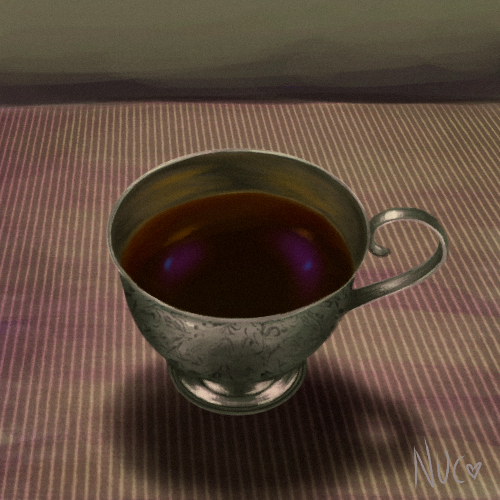
I wish you were here. In the evenings Rostov and I drink tea. I nearly burn my lips. Rostov laughs at the faces I make when I’m drinking. “Be heartier, brother. You must wring the softness out of yourself!”
Rostov doesn’t talk much about his past, but I’ve pieced together that he’s from a wealthy merchant family, that he and his father don’t speak anymore. He tried to make this a point of commonality between us, but I long to see my father again. Just not yet. Not until I’ve proven myself.
Rostov’s mother still sends him money secretly. He’s her little bunny rabbit, she writes in a frilly cursive on perfumed stationary. I accidentally read one of the letters he left on his desk. She says that she cries for him every night, wants him to come home to Moscow.
“Why did you leave?” I asked him one day.
“I was oppressed by a tyrant.” Rostov says with a serious face. I have more questions, but I don’t want to pry.
June 15, 1879
My Dear Grigoryi,
I haven’t heard from you in weeks! It would be safe for us to meet now, if you wished…
I may have glimpsed her yesterday. I nearly stopped breathing. Through a crack in the door I saw a yellow patch of hair, a glimmer of porcelain skin. I saw...her eyes. Same color as yours. Fields of cornflowers. But did I really see anything? The future we’ve dreamed about, you and I, it’s there like a shimmering mirage, but oh how it flickers in and out of existence. How it breaks my heart. Will it come to pass? The world spins in circles and history coils around itself, python-like, devouring everything in its path. Alyona will remain lovely in her loneliness. Silent. Until the time of revelation.
June 20, 1879
You’ve stopped responding, Grigoryi. I feel as if I’m just talking to myself.
I walked into the kitchen where Alyona’s dirty dishes were still stacked on the table. I picked up a plate and wondered which parts her mouth had touched. I traced my bottom lip along the ceramic rim, turning it round and round in my hands. My lips were streaked with goose fat. I imagined the same grease still on her (your) lips too. Was she still licking it off or did she already wipe it with a sleeve? I imagined that the cold porcelain of the plate was Alyona’s (your) skin. I kissed its flat center and immediately placed it down, ashamed.
Rostov has tasked me with throwing off the shackles of the familiar world. I’m memorizing the new names: “breast” for table, “ray” for pencil, “rose petal” for water glass. I can almost feel Alyona behind the wall, her breath radiating heat, charging the whole apartment with energy. “Night” for wall, “gladiolus” for book.
I whispered pleadingly, “Alyona for Grigoryi.”
Rostov was right. To be left alone with her would be obscene. The paper-thin wall, no, the night, guards me from my unthinkable desires.
June 25, 1879
Grigoryi,
My long-gone, longed-for friend. I don’t need to work anymore. Rostov takes care of all my needs. After our nightly tea I am so tired I can barely move. He drags me into my room, covers me with blankets. I think about Alyona next door. Does she drink Rostov’s special tea at night to help her sleep too? Rostov sometimes sits next to my bed and tells me stories of the future.
When the key turns, all will be restored. I must turn the key. Bring the dead back to life. Somewhere in underground laboratories scientists are building ships to fly the redeemed to the moon. Holy men construct homes for communal living. They will be better than the drafty St. Petersburg apartments, better even than the Winter Palace. We could live there, Grigoryi. You, me, Alyona. They will provide each man, woman and child the sazhens they need to work and play. These moon houses will be many stories high. The air is fresher on the moon. There are no horses and no coach drivers, no crude words shouted. It’s so quiet. The boulevards are moving roads. Stand still and you’re transported.
I picture Alyona’s face. It looks so much like yours. Her blushing innocence as her baby grows inside her womb. I would propose to her. Before or after the rapture? Before! I would offer to be the father of the child. We could both be fathers, Grigoryi. Keeping our love sacred, we would never touch her.
June 27, 1879
My Grigoryi,
We have a new lodger and he has a goat. The goat stays tied up in the yard. Green-eyed, sixteen-year-old Stepan stole the goat and tried to sell it at the market on the outskirts. Rostov was suspicious when Stepan didn’t haggle, but Rostov made him a deal anyway. Come with me and I won’t tell the authorities. Rostov may as well led them both by a rope. Stepan’s quiet and obedient. He memorized all the words in the room of renamed things within an hour, and he never complains when it’s time for our morning gymnastics.
“Squat lower!” Rostov yells, his mouth full of kasha. “Now jump!”
Stepan doesn’t ask about the tea that makes us sleepy and makes us tell all our secrets to Rostov. Silent Stepan and I must share a room. At least we don’t share a bed.
June 30, 1879
My room is full of people. Stepan has a brother and his brother has a ghost and that ghost blows a whistle and that whistle calls a dog, which wags its tail. I’m dizzy. The sea drowns some of us; it’s hard to breathe. Grigoryi, can you HEAR ME? We are surrounded. It IS dark. SOS, Grigoryi, SOS.
July 1, 1879
The sound of glass breaking startled me awake. I heard a faint cry, the scrape of furniture against the floor. But my room was locked from the outside.
“Rostov!” I banged on my door. “Rostov!”
He opened it, red-faced. “It wasn't her. I was wrong.”
I ran to the window. I looked down to the street. I saw nothing. “Alyona!”
“Ah, brother! She tried to break out. Even prophets make mistakes. But don’t worry, we will find her. She must be hidden in another body.”
The door to her secret room was open and I saw that it was empty. No Madonna with child. No Feminine Form Hiding the Divine. “She jumped,” Rostov said.
I hummed my grief. I whimpered. I couldn’t think.
“Our plan remains as it was. You go to the square tomorrow.” Rostov decided for me.
The Day the Clock Stops
I saw Alyona’s sky face, her eyes drifting clouds. She lifted the hem of her ancient dress to cover the world in prenatal darkness. I looked at my shaking hands holding the bomb wrapped in Rostov’s white handkerchief. My hands were so warm. Alyona in the sky nodded her approval. She watched me with your eyes, Grigoryi. I waited for the carriage to turn a corner, my whole body tense with anticipation. I threw it. I didn’t know where the bomb had gone. I didn’t hear an explosion. I ran.
Broken Clock
My Beautiful Absent Grigoryi,
He makes me eat the letters I write to you. I chew the paper until there’s only pulp on my tongue. Bitter ink. I’m not sure if you still exist. Have you been born yet? Rostov is hiding me. When I came home and told him what had happened he just shook his head. I’ve made a mistake, but I am not sure what I’ve done wrong. The insect inside me— I am ashamed. I am ashamed and I’m frightened. I drink tea. My eyes grow heavy. Maybe I’ll forget.
Rostov doesn’t let me read the news. He stopped buying papers.
But he won’t turn me in. He forgives me. I wash his clothes to keep myself busy. Should I go back? Should I tell my father? But no, the shame would be too much. Rostov gives me tea that helps me sleep. I see visions and my ears ring.
“Your little failed explosion,” he said, “didn’t have the desired effect and now…” I was nervous. Hedgehogs bounced in my field of vision. “She has warped history,” said Rostov. “Instead of leading us toward a glorious future, she has dragged us back into the past.”
My hands were still shaking the way they did when I was holding the bomb.
“What does it mean?” I asked.
“What does it m-m-mean?” He mocked my chattering-teeth. “It means you’ve botched the Apocalypse, it means history has reversed course. Back to serfdom is what it means.”
I felt goat horns sprout from my skull.
“I am your master now,” Rostov said.
My hands and feet became hooves.
“But…bbbut couldn’t you liberate me?” I bleated. I’ve sleepwalked backwards into something terrible. I’ve been annihilated. My Grigoryi—I feared I’d forget your name. Decades stretched between us.
“We need to play along. I won’t make you go out into fields with a scythe,” said Rostov. “But you’ll need to move into the servant quarters. That little closet under the stairs is yours now. You’ll try again. The next bomb you throw will explode. Now go make me some tea.”
He gagged me with the crumpled letter I had just written. I pulled it out of my mouth. Not a single word left. Scribbled nonsense, disgusting little worms squiggling on the page, swarming in every direction. The future disappeared. I was dragged back into the darkness. I could not find you, Grigoryi.
About the author:
Masha Kisel lives in Dayton, OH. She holds a PhD in Slavic Languages and Literatures from Northwestern University. Her fiction and non-fiction have been published in Gulf Coast, Prime Number, Brooklyn Review, McNeese Review, Tahoma Literary Review and many other journals. She is currently working on a novel and a collection of short stories. For more about Masha, please visit www.mashakisel.com.