Art by Jen Watt
The Hurried Patch
by Tim Collyer
Zara Malik built houses out of other people’s memories. On good days the work felt like joinery: measure twice, cut once. On bad days, other people’s grief leaked through. The wealthy wanted tidy nostalgia. Elias Vance didn’t.
He sat in her Red Lion Street studio in a charcoal coat that hadn’t seen rain, hands still, voice low.
“I want my childhood home,” he said. “Exact. No edits. And there’s a door in the attic. Keep it locked.”
“All right,” Zara said. “Where?”
“Hampstead. We left when I was thirteen.” He paused. “I haven’t been back.”
Legal sent the usual forms: privacy, consent to memory forensics, non-disclosure. Vance signed without reading. The recording room was warm and quiet. She settled the crown of sensors on his head.
“You’ll get prompts,” she said. “Polish, old paper, gas heating. I’ll ask simple questions.”
“Do what you have to,” he said. “Just keep the door shut.”
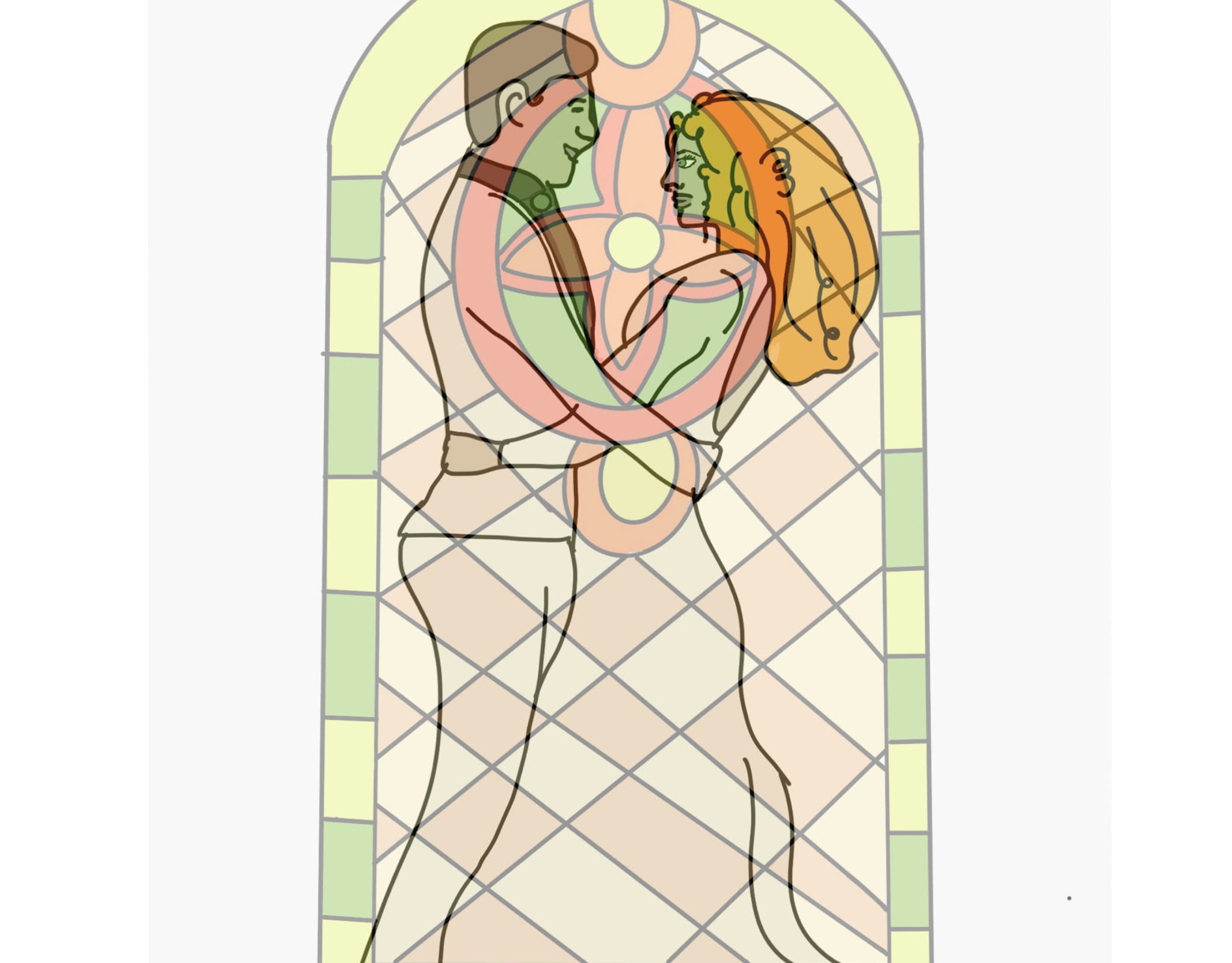
The first pass gave her a front hall with black and white tiles worn at the edges, a coat stand with a dog’s tooth mark, a brass bell-pull that never worked. Morning light moved through stained glass and drifted along the wall.
Then the staircase lengthened.
“Is that right?” she asked. “Number of steps?”
“Yes,” he said, a beat late.
She logged it and let the geometry adjust. Her sister had walked into a mirror at seven and hadn’t walked out. Different kind of gone. The dining room set itself: walnut table, eight chairs. Velvet carried a faint iron tang. Family portraits along the wall; the father’s eyes followed her. Two faces blurred when she looked again.
Faces often blurred. The brain hid what it couldn’t hold.
In the second session, the sitting room wouldn’t stay put. The fireplace narrowed then widened. The rug switched from Persian red to floral and back again.
“Your house redecorated itself?” she said, light on purpose.
“My mother rearranged,” he said. “She thought it kept a place alive.”
He grew precise upstairs: the boiler’s soft hum; a cold patch by the skylight; a board that sang low enough to feel. When she asked about the attic, he looked away.
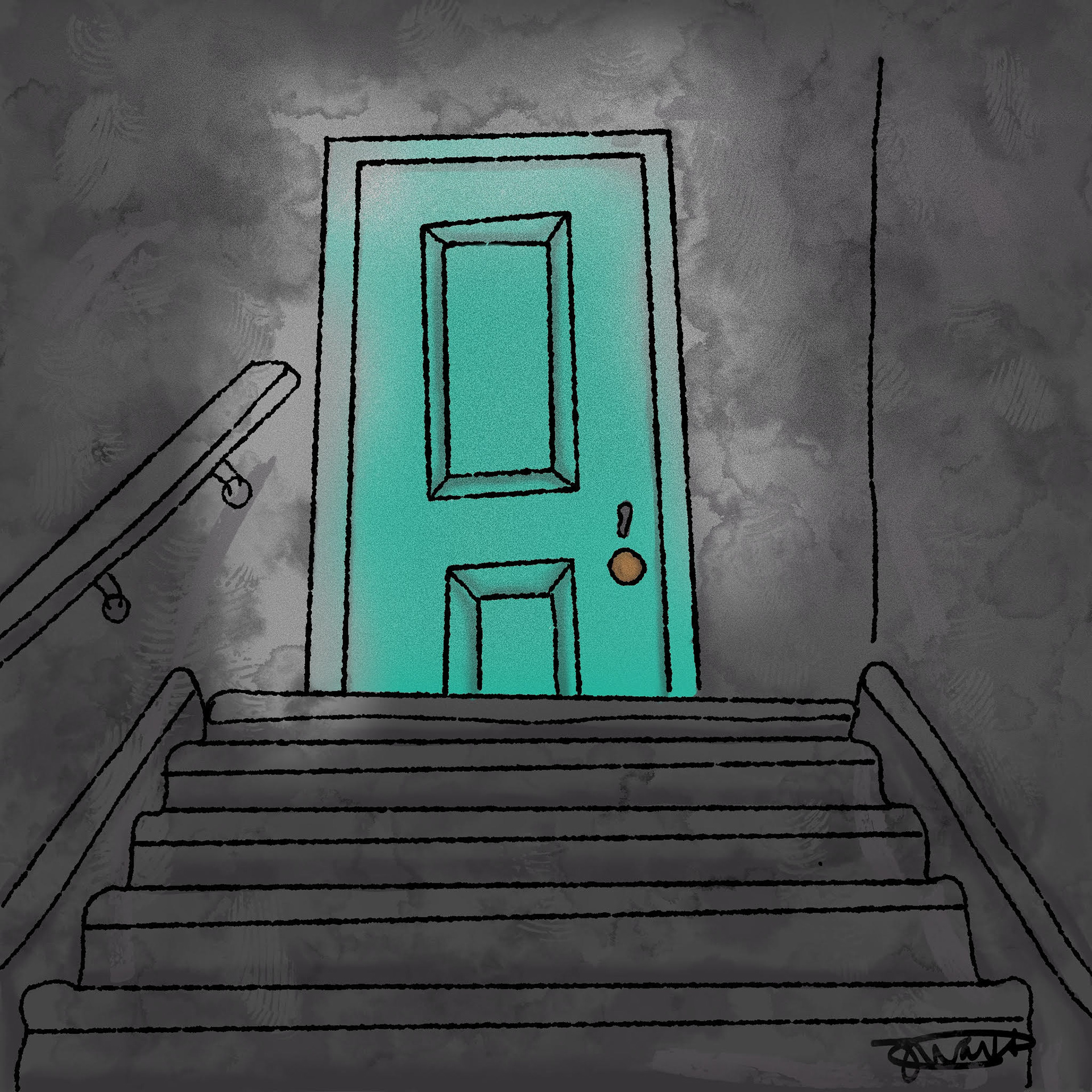
“Top of the stairs, right-hand side. Green paint, chipped at the bottom. The key was on a hook in Father’s study.” He swallowed. “I never had it.”
Or he remembered saying he never had it.
Between sessions she took the Northern line to Hampstead and walked to Windmill Hill. Number 17 still stood behind a rust-flecked gate. New names on the buzzer. She didn’t press. The street hummed with old money.
Back in the build, the house breathed. The haptic gloves picked up a slow, wrong pulse in the walls. The system added a countdown in the corner of her view: seventy-two hours until the reconstruction auto-deleted, standard for traumatic work. She kept going.
The simulation developed traces: chalk sums writing themselves in the schoolroom, jars shifting in the pantry, a bedspread changing and not changing. At the stair turn, scuff marks at child height. Half moons. A handprint, smudged.
She froze, replayed the feed. The marks held.
The study had the hook for the key. Vance’s list gave pipe racks, a crystal ashtray, a blotter with his father’s initials. The hook was empty. She slid a key behind the books where any child would look, then told the system to hide it if the user entered as Elias.
When she showed him the house, he stood straighter, rubbing thumb against forefinger, a quiet rhythm.
“You did it,” he said.
“We did,” she said.
He moved room to room, careful, correcting the order of the dining chairs, lingering by the ugly hallway clock. He avoided the attic stairs until he didn’t.
At the top, the door waited. Hospital green, brass handle worn smooth, keyhole blind.
“I can keep this closed,” she said.
He touched the paint and drew back as if it had bitten. “There was a storm. She wanted to play explorers. We had torches. We had no business up there. The boards by the dormer were old. I told her to stand back.” He tried for a smile that didn’t land. “I liked telling her what to do.”
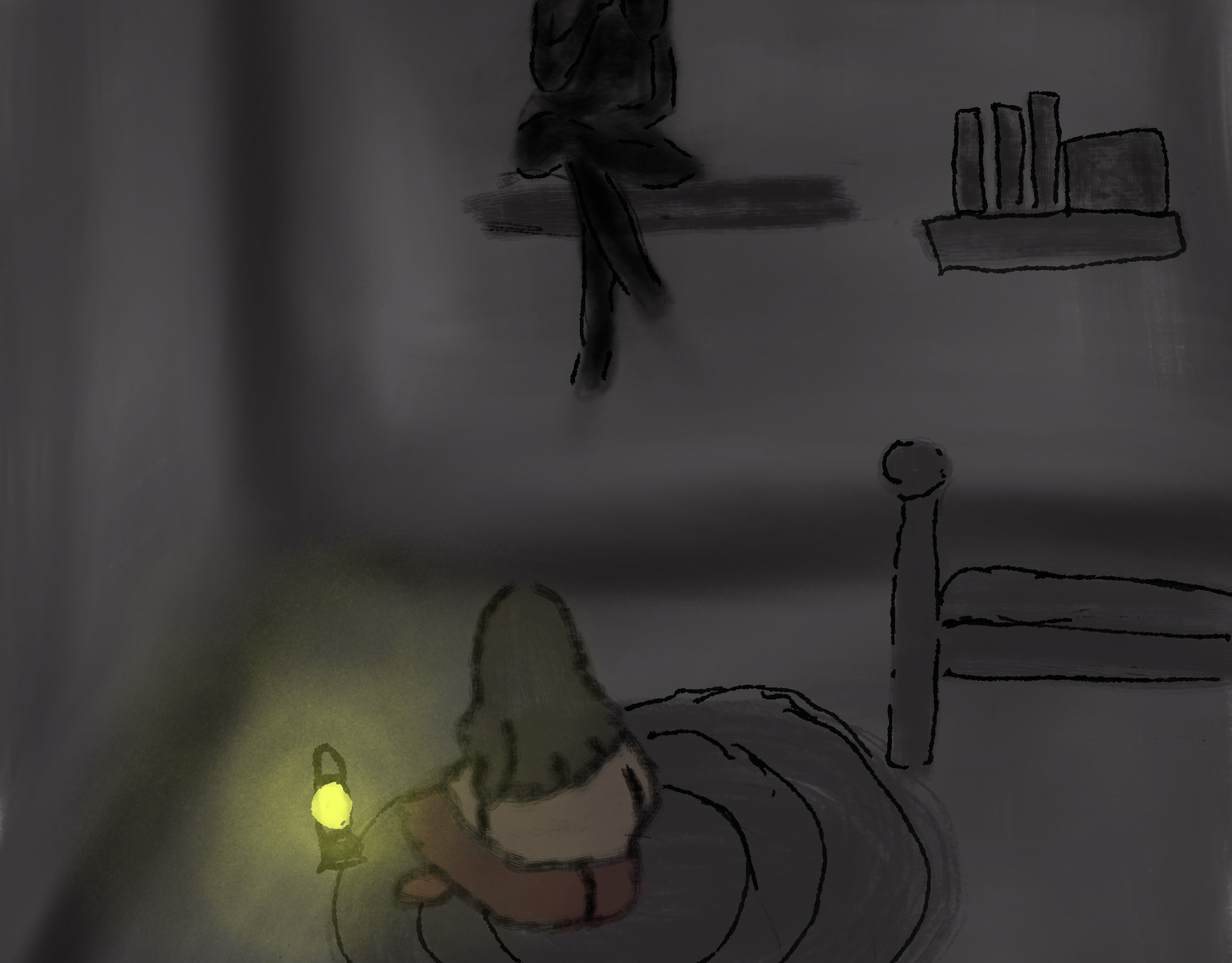
She could have stopped. Archive the build, take the fee. But the house clung. It followed her into the lift and the shower. She woke once with the feeling of small hands on her neck and then air.
Near midnight she reopened the project. In the build she turned the attic handle; it refused. She dropped into the editor and checked the stitching where his recall met plans and survey notes. The attic showed two dormers, not one; the staircase count didn’t match. She unpicked the threads and let the scaffold recalc.
The door clicked.
The room was simple: a narrow bed under a quilt of squares; a low shelf of books with one missing, white gap like a pulled tooth; paper dolls along the skirting; a crayon drawing—two stick figures and a cloud-dog; on the table, a torch with its battery cap taped. In the eaves, a dress-up chest with its lid half-raised. The floor dipped where the roof sloped. Near the left dormer, older boards met new, a hurried patch.
Zara took off the headset and called Vance. “I need you here.”
He arrived in a coat too thin for February. He looked smaller.
“We’ve found the room,” she said. “If we confirm anything, I can’t pretend we didn’t. I’ve kept the chain of custody clean. Courts accept this now. Sealing pauses deletion.”
He looked at the carpet and nodded. “Open it.”
Inside, he set his hand on the handle like a man testing heat. The door gave. He stepped in and stopped. The bed, dolls, taped torch, drawing. The chest.
He crouched by the left dormer, palm finding the dip.
“I told her to stand back,” he said, not to Zara. “I pushed past to show I wasn’t scared. My foot went through rotten boards. I fell to my knee. She laughed. I caught her wrist, too hard. She twisted. Her head hit the window frame. A small sound.” He closed his eyes. “I counted to ten. Heroes always wake up by ten.”
He opened his eyes. The quilt, the paper dolls, the gap on the shelf where something had been taken and not returned.
“She was small,” he said. “Her eyes were open.” He looked at the dress-up chest. “I told myself she was asleep and I didn’t want her to catch a cold.”
His hand found the join between old boards and new. He traced it with his thumb.
The room kept its air.
“I’ll give this to the police,” Zara said. “Build logs, timestamps, model history. They’ll search the house.”
Vance rubbed his face. “Good,” he said.
Legal sealed the build and sent it to the Met. In Hampstead, officers climbed narrow stairs and asked to see the eaves. A news van idled on a quiet street. Other rich clients watched and said nothing.
Zara went home, stood under the shower until the water cooled, ate toast she didn’t want. The next day she opened the build. The house waited. The key was still behind the books because that was where children would look. Upstairs, the door opened onto the same room. The small dent in the quilt remained.
Her phone filled with calls: compliance, a solicitor, her mother. A client wanted “something with summer light”. Another wanted their wedding to smell less of lilies. She filed both under Later.
In the afternoon she crossed Lincoln’s Inn Fields and watched students kick a stubborn ball. The sky did three kinds of weather at once.
In the simulation, dust hung in moving light. In the world, a room waited behind an open door. Somewhere, a man who began with “I was a boy” had stopped trying to finish the sentence.
In the morning she went back to work. Someone else’s sister was waiting.
About the author:
Tim Collyer is a British short story writer and multiple Pushcart Prize nominee. His work won the International Flash 500 Prize and the Seán Ó Faoláin Short Story Competition, and has appeared in The Threepenny Review, Nebula, Clockhouse, Woodside Review, and Gently Mad Magazine, as well as the Bath Flash Fiction Anthology. His fiction has been recognised in over thirty international competitions and is known for its literary focus on memory, ethics, and the quiet pressures shaping ordinary lives. He lives in Wiltshire.
@author_tim_collyer